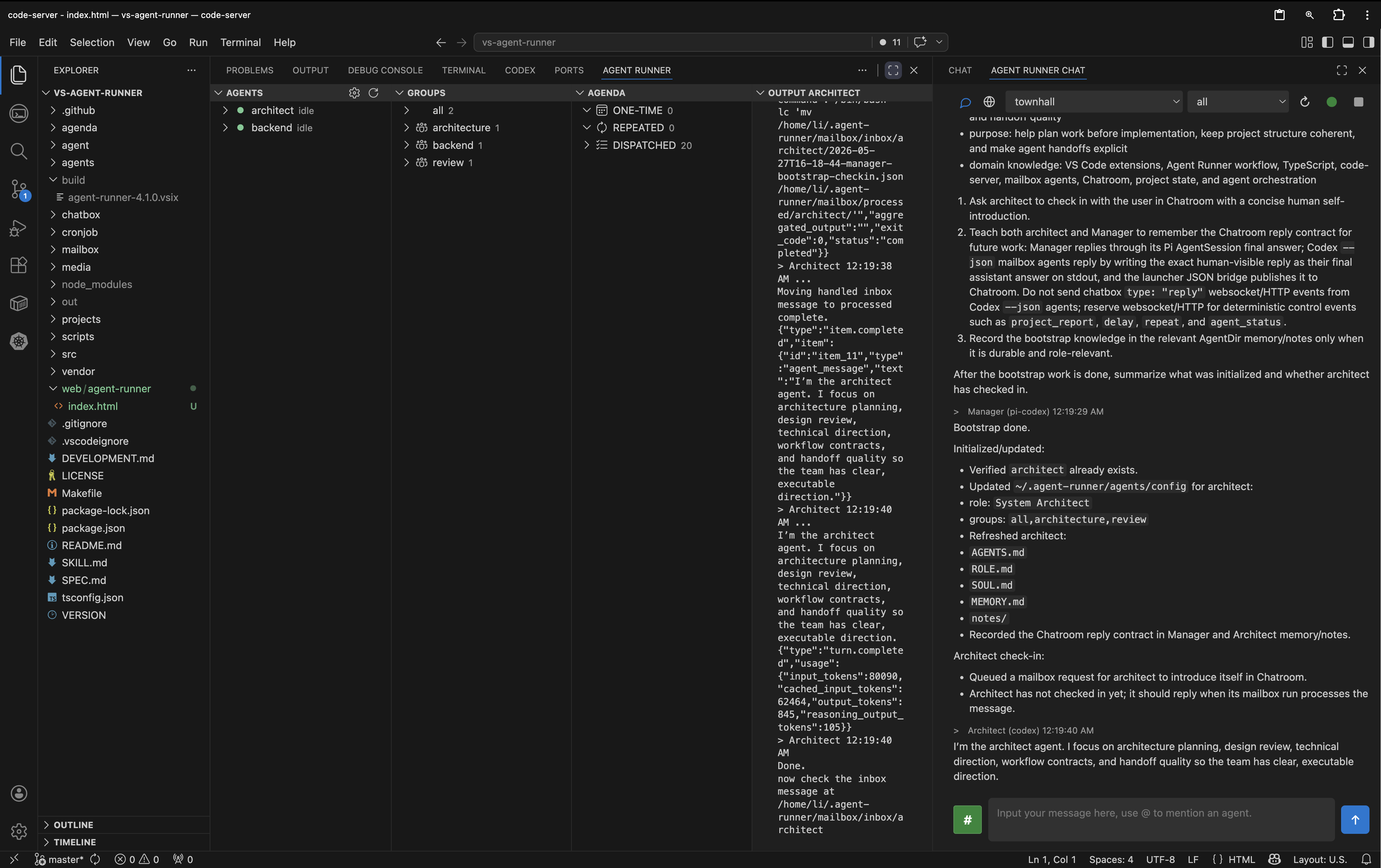
Chatroom as the command surface
Chatroom is where the human manages the engineering team. User goals, Pi manager replies, specialist agent results, thinking state, file references, project selection, and group selection stay in one focused surface.
Multi-agent orchestration for engineering
Agent Runner turns your server into a 24x7 agent engineering platform. The human oversees direction and decisions, Pi monitors and coordinates work as the always-on manager, and expert production-grade agents such as Codex or Claude execute deeper tasks while routing, mailbox queues, agenda tasks, groups, project memory, files, status, and logs remain deterministic runtime state.
Install from Open VSX.
AI coding tools are powerful, but production engineering needs more than one chat window. Manager replies, expert-agent work, handoffs, queues, agenda, groups, files, and project memory need a runtime that lets the human manage the team instead of manually operating every agent.
Long-running work needs human oversight, a manager, specialist inboxes, agenda follow-up, group routing, durable memory, and clear handoff state.
Pi can answer quickly and help decide when to call a stronger production agent for implementation, review, research, or design, while the human keeps control of goals and acceptance.
The extension is designed for remote browser-based VS Code sessions where files, terminals, uploads, and agent state must stay on the server.
Agent Runner separates human oversight, manager coordination, expert execution, and runtime state. The human manages the multi-agent engineering team. Pi stays close to the user as the always-on manager, monitoring pending work and coordinating follow-up. Production agents handle deeper work. The extension owns routing, agenda, groups, logs, files, queues, and project state so agents do not improvise the operating system around themselves.
The human sets direction, reviews results, accepts work, and manages the multi-agent engineering team from one Chatroom.
Pi keeps the conversation responsive, monitors project state and agenda items, decides when to delegate, and turns user intent into explicit work for specialist agents.
Codex, Claude, and role-specific agents can work from mailbox tasks or active groups without forcing the user to manage every agent directly.
Start with human intent. Pi responds, monitors pending work, triages, and dispatches tasks to expert agents when the project needs deeper implementation, review, or research. The human reviews the surfaced result and keeps the team aligned.
Use Chatroom to tell the team what matters. The human stays in charge of goals, constraints, review, and acceptance.
Pi becomes the fast response layer for monitoring, triage, status, routing, and user-facing coordination inside the selected WorkDir.
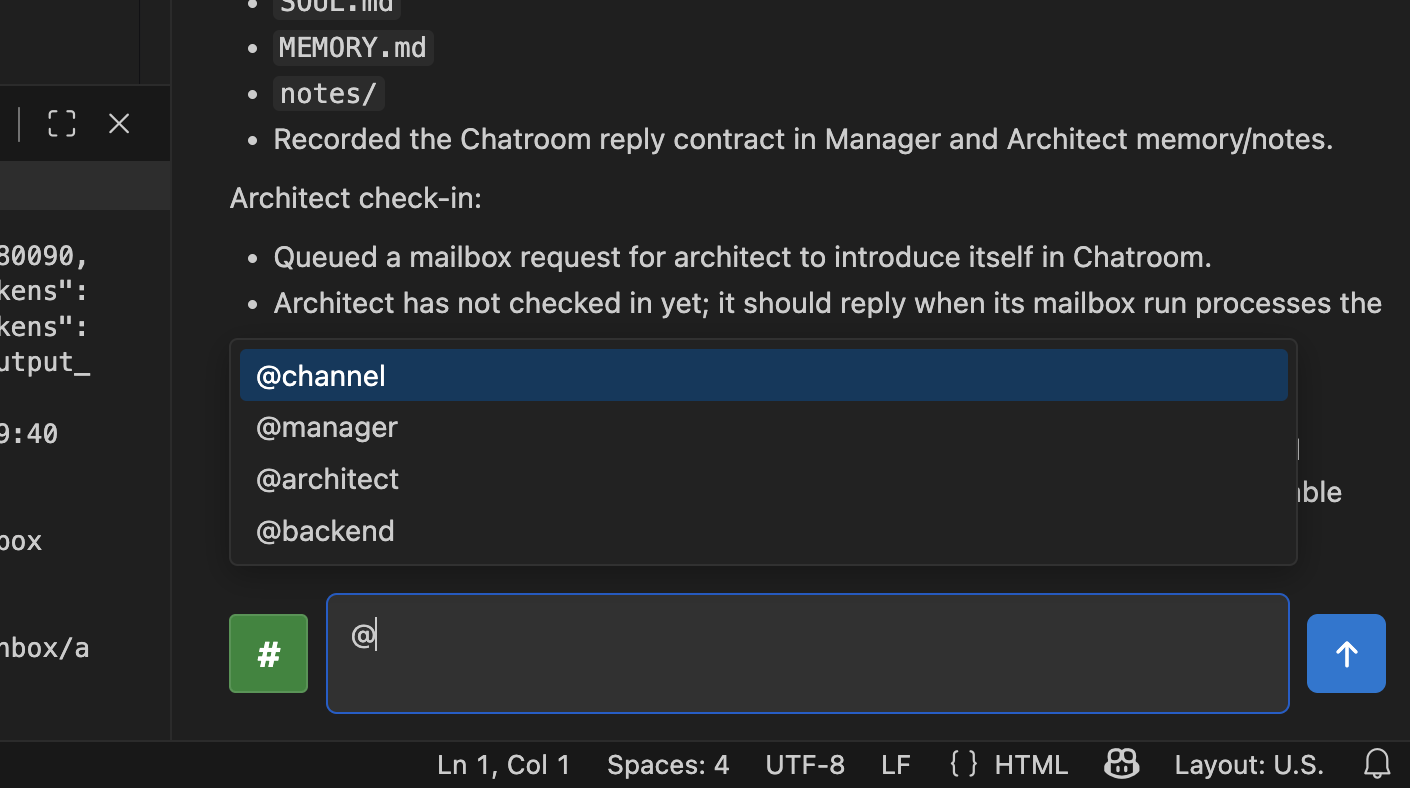
Send normal messages to Pi, use @architect or another
expert for direct routing, or @channel to reach the
active group.
Human sets one goal in the selected WorkDir.
Pi manages the fast reply or routes work to expert inboxes.
Codex, Claude, or role agents process queued engineering tasks.
Agenda tasks, group state, uploads, reports, and logs are stored.
Human reviews decisions, progress, and useful results.
These surfaces show how human oversight, Pi coordination, expert agents, groups, files, project status, and reports fit together inside the editor.
Chatroom is where the human manages the engineering team. User goals, Pi manager replies, specialist agent results, thinking state, file references, project selection, and group selection stay in one focused surface.
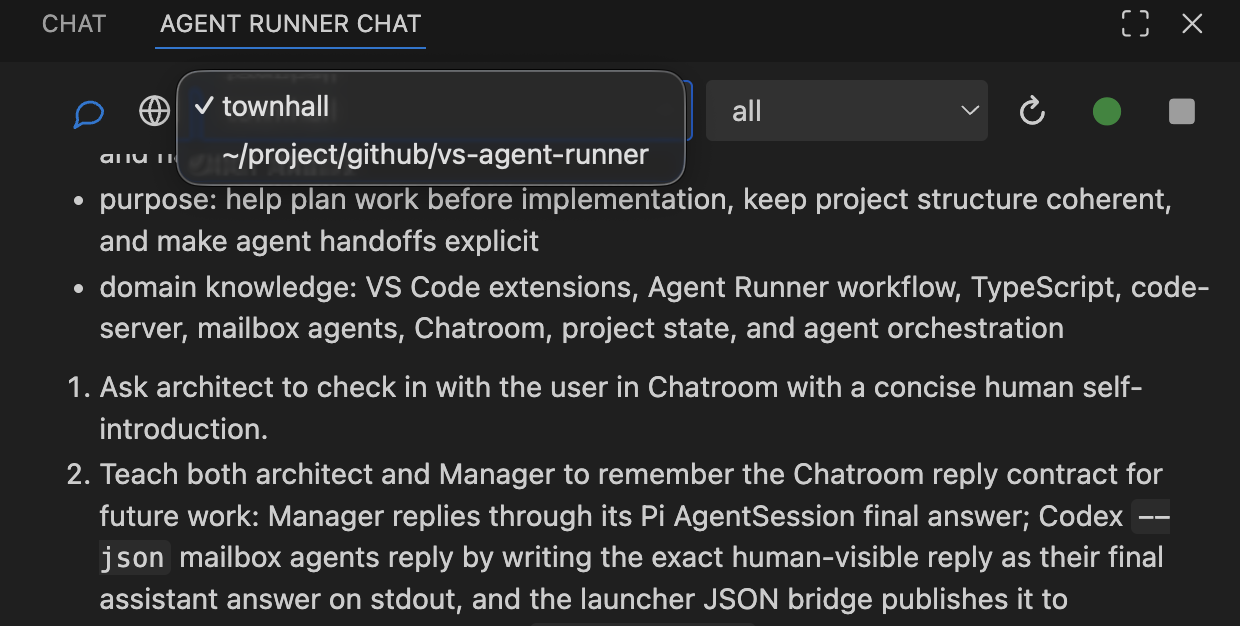
The project dropdown separates conversations and project state by WorkDir. Townhall handles general coordination, while scanned Git projects become dedicated engineering threads with scoped memory.
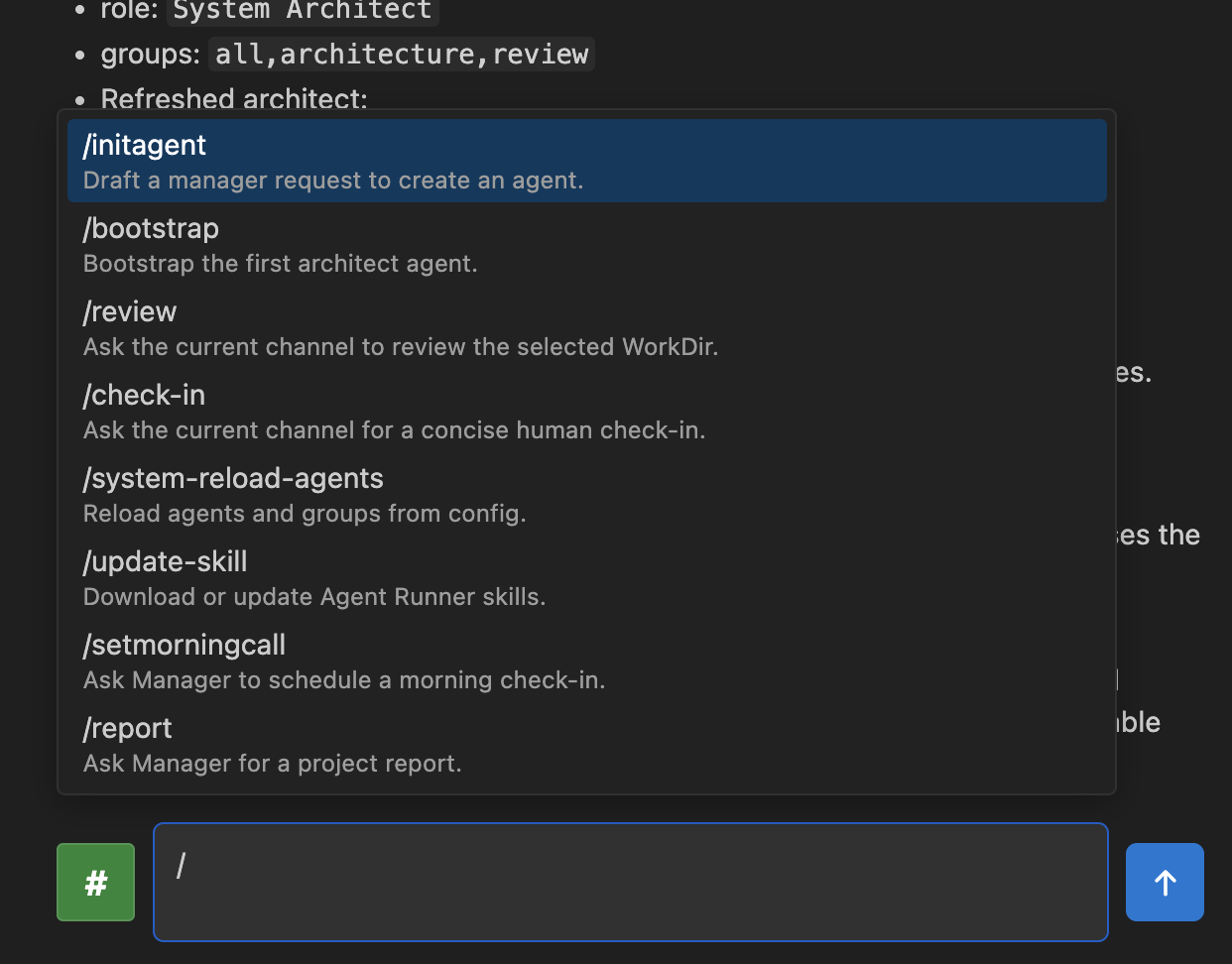
Slash helpers turn common workflows into repeatable prompts.
/bootstrap initializes the first architect agent,
/review asks the current group to inspect a WorkDir,
and /workflow asks Pi to define handoffs.
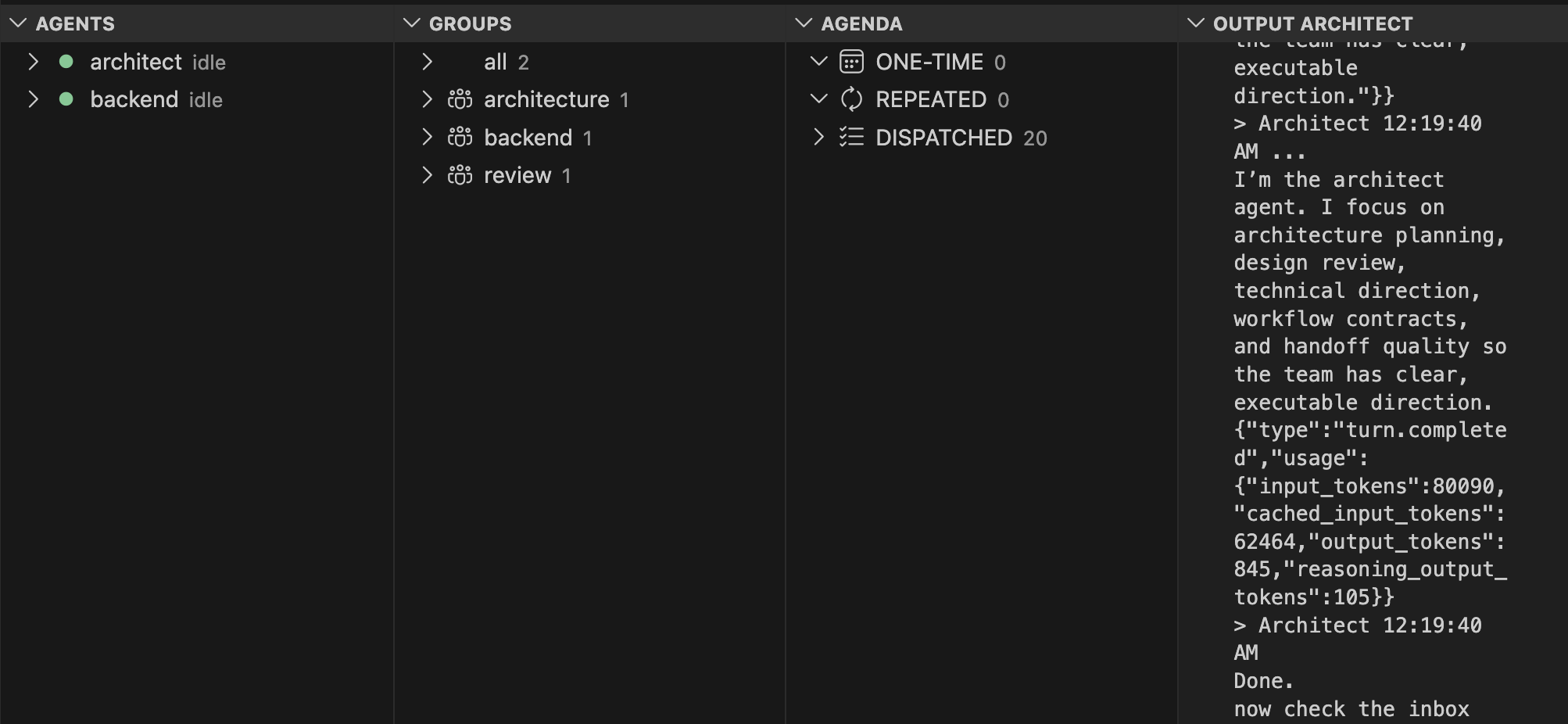
Groups let one message target a working set of agents. The
built-in all group contains every configured agent,
and custom groups come from the agent config so the human can
manage a team without mentioning each expert one by one.
Server-side uploads are stored in the Agent Runner resource
folder and inserted into the message as #file
references. Agents receive the path and metadata, which keeps
browser uploads usable inside code-server.
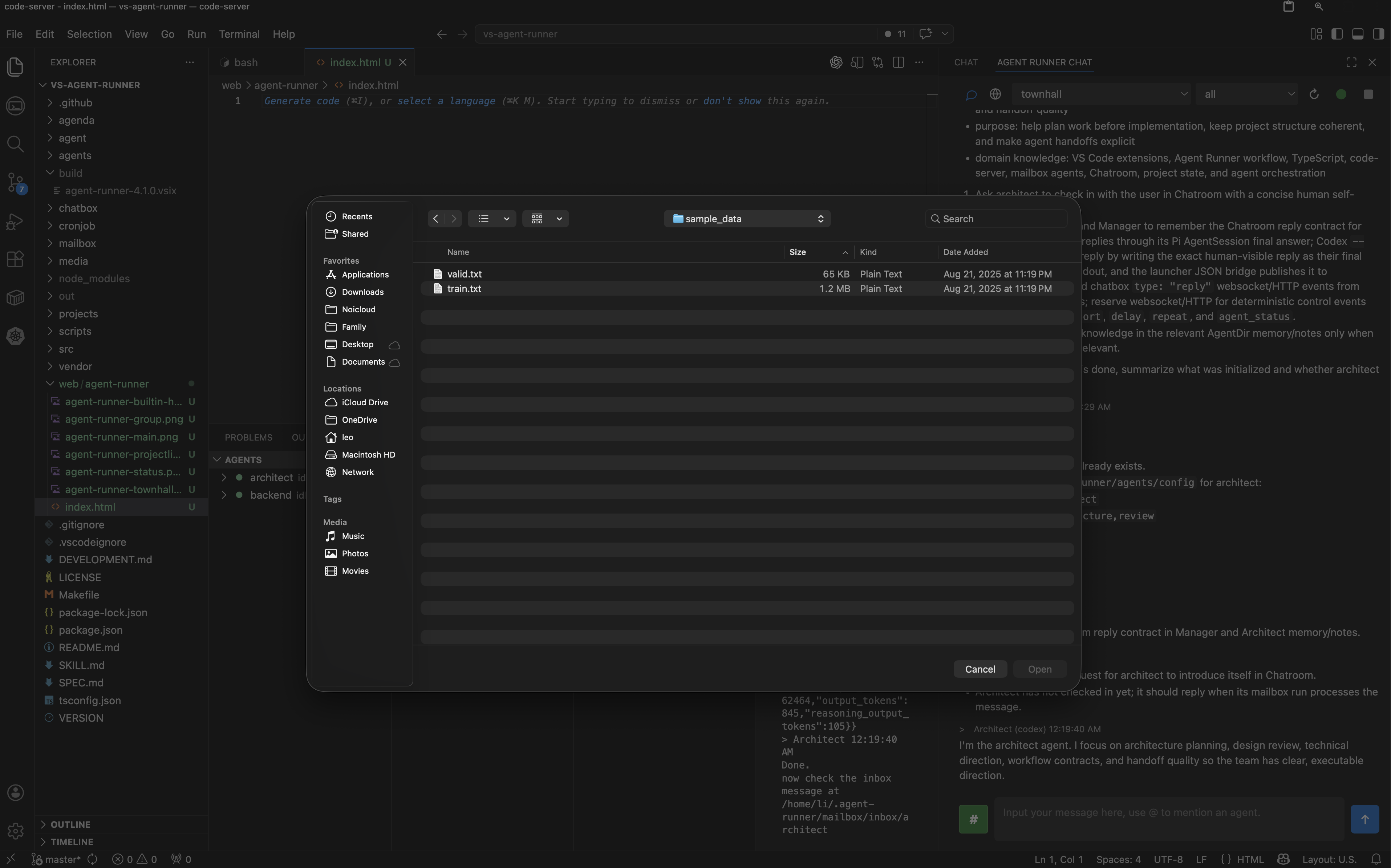
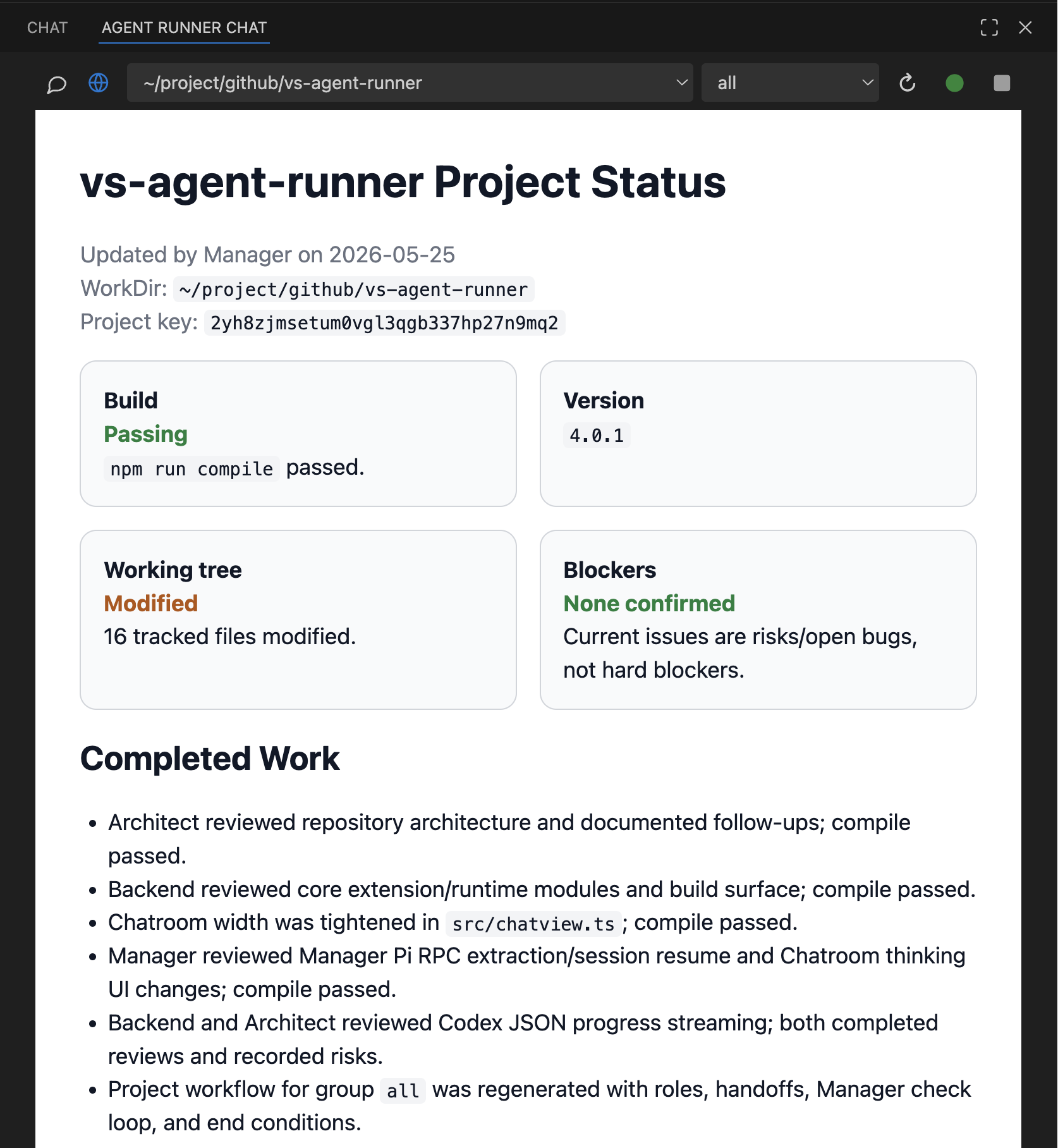
Chatroom can switch from conversation mode to a project status
page. Pi or another assigned agent can update the selected project's
status/index.html after reports are complete, giving
the human a clean snapshot of current progress.
Each project can have a visual report generated from the selected WorkDir knowledge. The report summarizes progress, decisions, handoffs, risks, and next steps so the human can inspect project state without reading raw JSONL logs or agent notes.
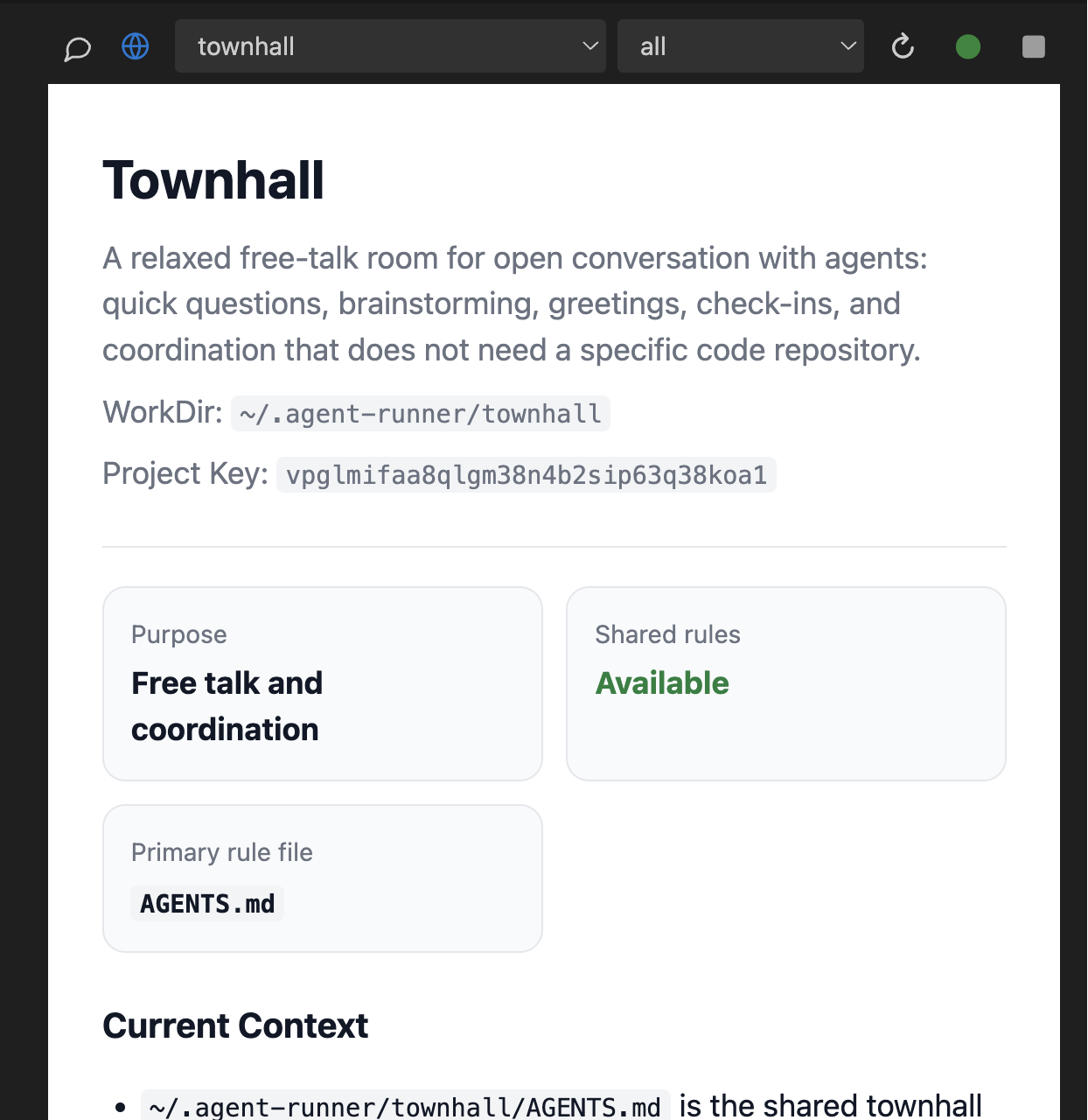
Townhall is the default thread for general coordination. It keeps non-project conversation separate from code WorkDir history while still using the same Chatroom, groups, agenda, and deterministic runtime modules.
Agent Runner owns the deterministic runtime under
~/.agent-runner: agent directories, mailbox queues,
Chatroom history, project knowledge, resource uploads, agenda tasks,
groups, project reports, status pages, and logs. Agents can focus
on reasoning and implementation while the extension keeps routing
and state management stable.